
Reflection Agents: AI Self-Improvement with Mastra Framework
In one of my recent articles, I talked about Docling, a fantastic Python library that's been growing in popularity in the generative AI ecosystem. But today I want to introduce another lib that's winning over full-stack devs: the Mastra Framework.
In this article, I'll explore an agent architecture called Reflection Agent and show you how to implement it using Mastra in a practical and efficient way.
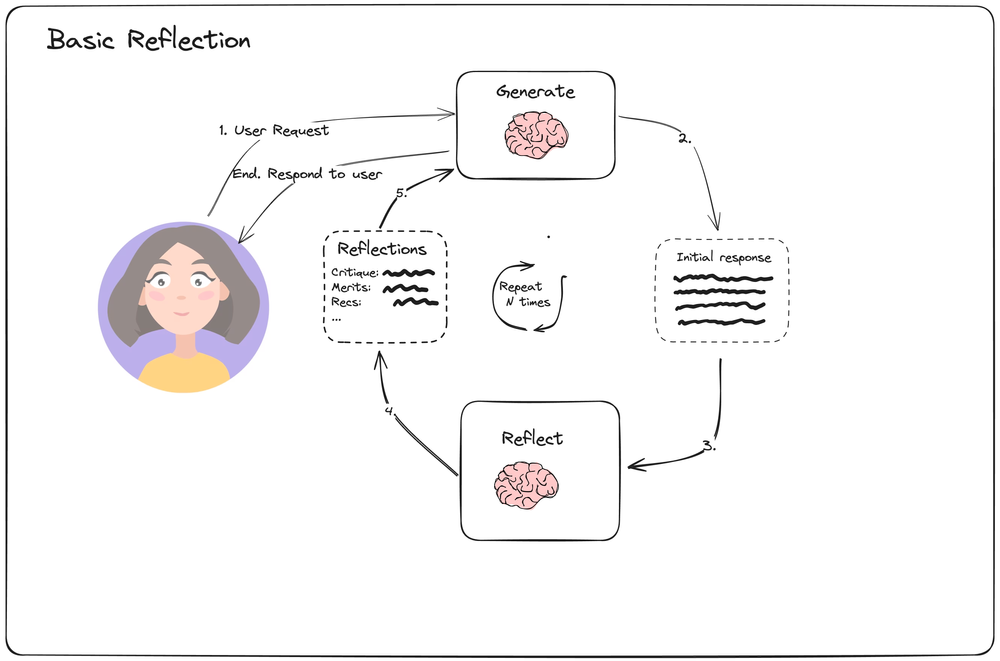
What is a Reflection Agent?
Imagine an AI agent that doesn't just respond, but thinks about its own answers and continuously improves them. That's a Reflection Agent!
The Self-Improvement Cycle
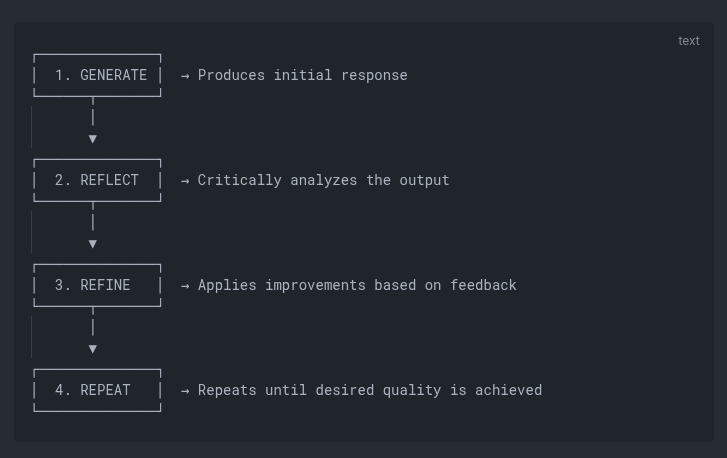
This pattern is inspired by self-reflection and self-correction techniques used in advanced AI systems, where the model not only generates content but also evaluates and continuously improves it.
Why does this matter?
- Higher quality responses
- Reduction of errors and inaccuracies
- Automatic iterative improvement
- Simulation of critical thinking
Meet the Mastra Framework
Mastra is a modern and powerful framework for building AI-based applications. Developed with TypeScript, it offers a modular and extensible architecture for creating agents, workflows, and AI tools.
💡 Real Experience: We've been using it here at DevelopsToday and it has proven to be an excellent high-level framework for various use cases.
Key Features
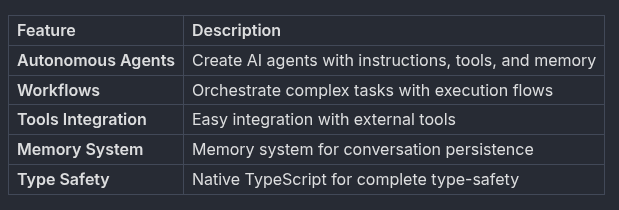
Why Choose Mastra?
- Type-Safe: TypeScript end-to-end
- Modular: Flexible and extensible architecture
- Performance: Optimized for production
- Developer Experience: Clean and intuitive API
- Growing Community: Active support and rich documentation
Quick Example
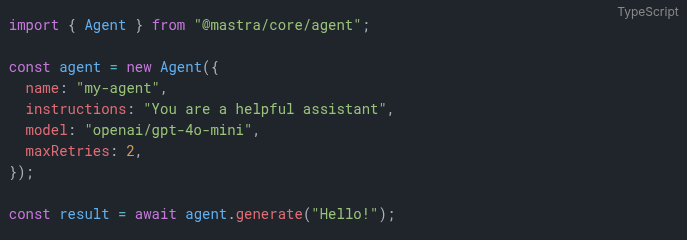
Simple, elegant, and powerful!
Reflection Agent Architecture
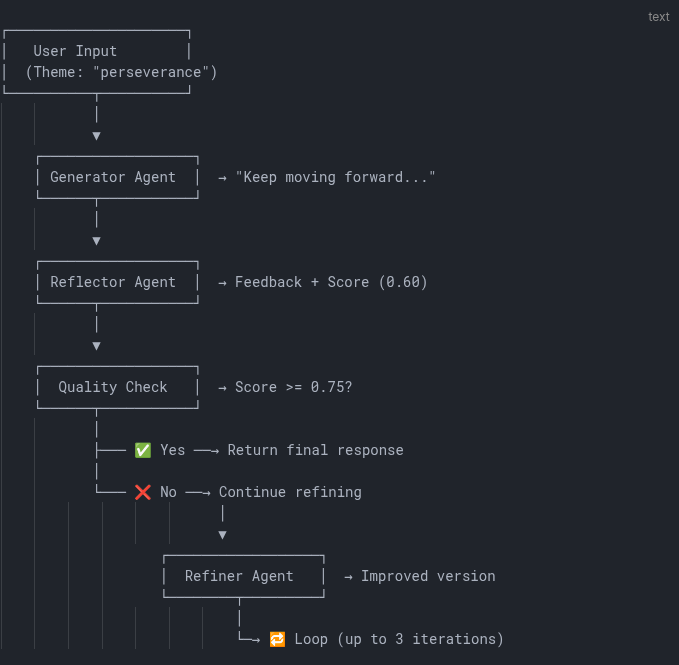
Let's build a system with 4 main components that work in harmony:
1. Generator Agent (The Creator)
Mission: Generate the initial response based on user input.
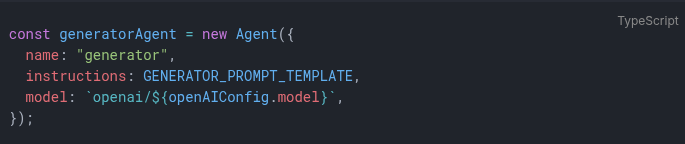
What it does:
- Receives a theme as input
- Generates a short motivational phrase (15-20 words)
- Focuses on impact and memorability
2. Reflector Agent (The Critic)
Mission: Critically analyze the response and provide constructive feedback.

What it does:
- Evaluates quality, impact, and relevance
- Identifies strengths and weaknesses
- Provides concrete improvement suggestions
- Focuses on brevity and direction
3. Refiner Agent (The Perfectionist)
Mission: Improve the original response by applying received feedback.
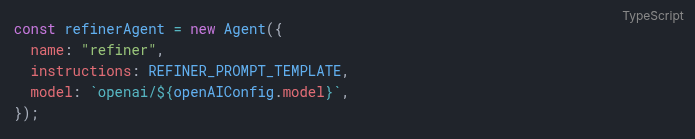
What it does:
- Incorporates reflector's suggestions
- Maintains identified strengths
- Produces progressively better versions
- Ensures brevity and impact
4. Orchestrator (The Conductor)
Mission: Coordinate the complete reflection cycle and decide when to stop.
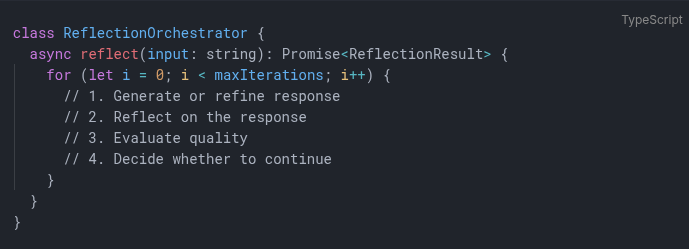
Responsibilities:
- Manages the iterative cycle
- Controls quality criteria
- Defines when to stop (threshold or max iterations)
- Maintains improvement history
Complete Execution Flow
Real Execution Example
Let's see the system in action!
Input

Iteration 1
Generator:

Reflector:
- Strengths: Positive message
- Weaknesses: Too generic
- Suggestions: Add emotional resonance
- Score: 0.60 ❌
Iteration 2
Refiner:

Reflector:
- Strengths: More impactful
- Weaknesses: Could be more concise
- Suggestions: Refine structure
- Score: 0.65 ❌
Iteration 3
Refiner:

Reflector:
- Strengths: Excellent emotional resonance, clear message
- Weaknesses: None significant
- Score: 0.75 ❌
🎉 Final Result

Improvement achieved: 60% → 75% (+25% quality)
Conclusion
The Reflection Agent pattern combined with the Mastra Framework offers a powerful approach to create AI systems that:
- Think critically about their own responses
- Continuously improve output quality
- Maintain type-safety and developer experience
- Scale easily to complex use cases
Next Steps
- Try the complete code on GitHub
- Explore the Mastra documentation
- Adapt it to your specific use case
- Share your results!
Member discussion